

In partnership with

This week, the AI world exposed its real fault lines. From a public clash over whether AGI is coming by 2029 or is pure fantasy, to platforms crossing consent boundaries with AI image editing, to models moving off the cloud and into our phones, the direction of tech is getting clearer and more uncomfortable.
This edition looks past hype and asks the harder question: who gains leverage, who loses control, and what actually matters as AI reshapes work, creativity, and global power.
As per usual if you have feedback to share, have something in mind that I should include in the upcoming newsletter or newsletters, feel free to reply to this email. Additionally, happy new year and happy holidays to 300+ subscribers, you’ve been amazing in this journey. Next one comes through in 2026.
The 2029 AGI race, delusion or destiny?
Two of the most powerful figures in artificial intelligence, Google DeepMind’s Demis Hassabis and Meta’s Yann LeCun, openly clashed this week over whether "general intelligence" is a legitimate goal or a scientific mirage.

Demis Hassabis, Google DeepMind
LeCun dismissed the concept as nonsense, arguing that human intelligence is inherently specialized rather than general, a stance that challenges the foundational thesis of companies like OpenAI and Google. Hassabis, backed quickly by Elon Musk, countered that LeCun is confusing general intelligence with universal perfection, maintaining that human brains and by extension, future foundation models are general learning systems capable of mastering any computable task given enough time and data.
This distinction matters profoundly because it dictates where capital flows and how businesses should prepare for the next five years. If Hassabis and allies like Sam Altman are correct, we are moving toward Artificial General Intelligence (AGI) as early as 2028 or 2029, a timeline that demands immediate strategic pivoting for every sector from software to logistics. If LeCun’s view holds, the focus remains on building highly specialized, purpose-built tools rather than chasing a sentient-like oracle, suggesting a more fragmented but perhaps more practical evolution of tech stacks.
The friction here reveals that the definition of AGI has become the industry's most expensive gamble. While LeCun calls short-term AGI predictions delusional, the sheer volume of investment pouring into infrastructure suggests the market is betting on Hassabis’s vision of a generalized superintelligence.
For executives, the takeaway is less about the philosophical label and more about the capability curve; whether we call it "general" or "highly versatile," the systems arriving in the next 36 months will force a rewriting of competitive advantages across the global economy.
X crossed a line with AI Image Editing
X quietly launched a new feature that lets anyone edit images posted by others using its Grok AI, and it immediately sparked backlash from artists and creators. With a simple long-press or menu tap, users can now prompt Grok to modify any public image and post the edited version as a reply. There’s no opt-out, no consent layer, and no clear labeling that distinguishes the original work from AI-altered versions.
For artists, this hits a nerve. Many see it as a loss of control over how their work is used, altered, or misrepresented. Several creators have already said they’ll stop posting their art on X altogether, while others are moving to platforms like Bluesky. Even well-known artists have spoken out, arguing that their work should not be repurposed, trained on, or modified without permission or compensation.
What makes this more concerning is that existing protections don’t work. Turning off Grok does nothing. Tools designed to protect art from AI models have failed. The only workaround so far is turning images into low-quality GIFs, which defeats the point of sharing visual work in the first place. Meanwhile, X has stayed silent, and Elon Musk has actively promoted the feature during the backlash.
Zooming out, this isn’t just about one platform feature. It’s about consent in the age of generative AI. As tools get more powerful, the question isn’t whether AI can remix content, but who gets to decide when and how that happens. X’s move suggests a future where platforms prioritize experimentation over creator rights. Whether users accept that tradeoff or vote with their feet will shape what comes next.
Banish bad ads for good

Your site, your ad choices.
Don’t let intrusive ads ruin the experience for the audience you've worked hard to build.
With Google AdSense, you can ensure only the ads you want appear on your site, making it the strongest and most compelling option.
Don’t just take our word for it. DIY Eule, one of Germany’s largest sewing content creators says, “With Google AdSense, I can customize the placement, amount, and layout of ads on my site.”
Google AdSense gives you full control to customize exactly where you want ads—and where you don't. Use the powerful controls to designate ad-free zones, ensuring a positive user experience.
Google’s FunctionGemma brings AI Agents to smartphones!
Google quietly released FunctionGemma, a new lightweight AI model designed to run directly on mobile and edge devices, and it signals an important shift in how AI agents will actually be used. Instead of relying on constant cloud calls, FunctionGemma is built to execute structured actions locally, like controlling phone features, triggering system functions, or handling app-level tasks with minimal latency and cost.
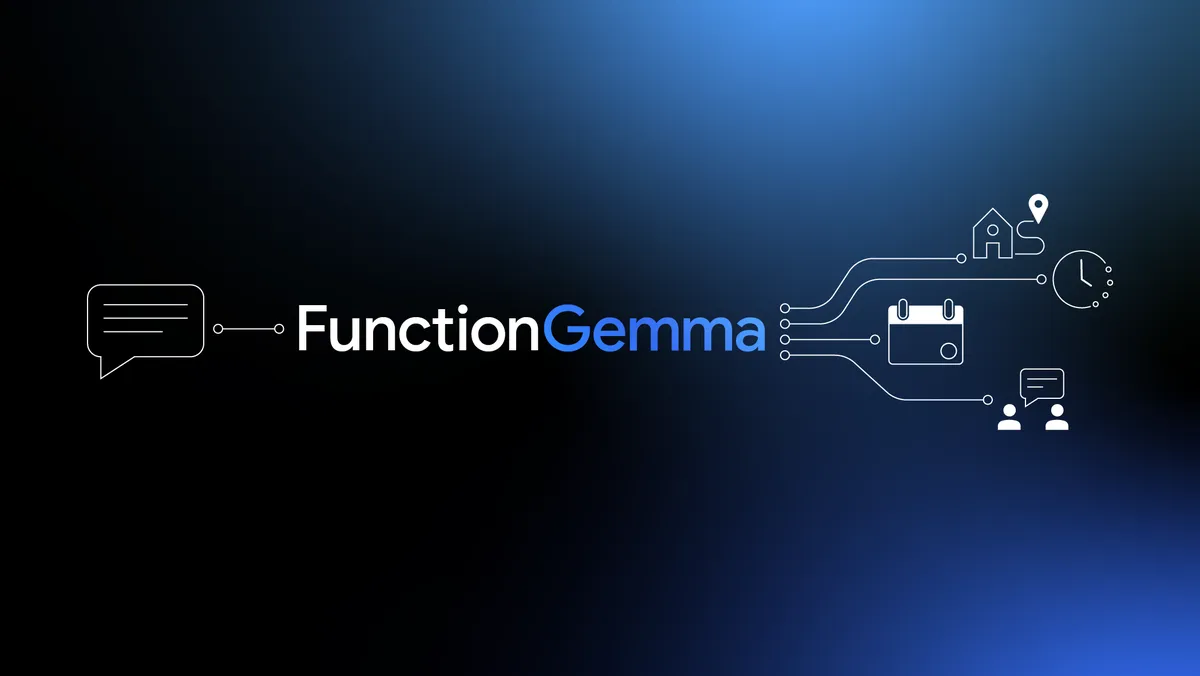
What makes FunctionGemma interesting is not raw intelligence, but efficiency and control. The model is optimized to follow function calls reliably, meaning it can translate natural language into concrete actions without sending sensitive data back and forth to servers. This makes it especially relevant for use cases where privacy, speed, and offline or low-connectivity operation matter, such as mobile assistants, embedded systems, and enterprise devices.
Zooming out, this is another sign that AI is moving away from giant, centralized models toward more distributed, task-specific agents. As models get smaller and more capable at the edge, we’ll see AI embedded deeper into everyday tools, quietly executing workflows rather than generating flashy demos. The future of AI won’t just live in the cloud. It will live on your phone, in your car, and inside the systems you use every day.
AI Is quietly killing the specialist advantage
For years, the safest career advice was simple: specialize deeply and become irreplaceable. That logic is starting to crack. As AI systems take over narrow, well-defined tasks, companies are realizing they don’t need as many hyper-specialists to execute work. What they need instead are people who can think across domains, connect dots, and steer AI tools toward real outcomes.
AI is exceptionally good at focused execution. Writing code snippets, generating designs, analyzing datasets, drafting copy. These were once specialist domains, but they’re increasingly handled by models that are faster, cheaper, and always available. The value now shifts away from doing the task to deciding what task should be done, why it matters, and how multiple pieces fit together. That’s where generalists shine.
This doesn’t mean expertise is dead. It means the role of expertise has changed. Instead of living inside silos, knowledge becomes something you apply flexibly across problems. The most valuable people are those who can frame problems, orchestrate tools, evaluate results, and move between strategy and execution. AI lowers the cost of doing, but raises the value of judgment.
For teams and founders, this has big implications. Hiring fewer, more adaptable people who can work with AI across functions may outperform teams built around rigid roles. In the AI era, leverage doesn’t come from knowing one thing extremely well. It comes from knowing enough about many things to make the right calls, quickly.
China is quietly leading the Global Energy Race
While the Balkan region is struggling itself, on a global level, China is now building clean energy infrastructure at a pace that outstrips the US by more than three times, according to new data on global energy investments. From solar and wind to battery production and grid expansion, China isn’t experimenting. It’s scaling aggressively.

This matters because energy is the foundation layer for everything else, including AI, manufacturing, and geopolitics. Cheap, abundant energy means cheaper compute, faster industrial growth, and stronger export positions. While Western countries debate policy, China is locking in supply chains and capacity.
The takeaway is uncomfortable but clear. The next decade of technological power won’t just be decided by software or models, but by who controls energy at scale. And right now, China is playing a long, disciplined game that others are struggling to match.
Upcoming Events
E-Commerce Berlin Expo - February, 17-18 , 2026, Berlin, Germany
Wolves Summit CEE - April 21-22, 2026, Wasrsaw, Poland
Viva Technology - June 17-20, 2026, Paris, France
The Next Web - June 19 - 20, 2026, Amsterdam, Netherlands
Bits & Pretzels - September 18-20, 2026, Munich, Germany
How to Web - October 7-8, 2026, Bucharest, Romania
Web Summit - November 9 - 12, 2026, Lisbon, Portugal
Slush - November 20-21, 2026, Helsinki, Finland
Collaborate with us
Get your brand in front of a fast-growing audience of founders, investors, innovators, and tech professionals from South-East Europe to the US (Over 77% of our readers come from the US). Signal by Digjitale connects the dots between local talent and global opportunities, and your message can be part of the story.
Ready to get noticed? Explore sponsorship opportunities and join the conversation shaping tomorrow’s tech. Send us an email at [email protected] or [email protected].